
Badly run meetings are time theft.
After working with organizations and associations for over a decade and facilitating hundreds of sessions, I have heard, one way or another, how meetings suck people’s time and energy.
Many don’t like attending them. But it is in meetings that vision, direction, and collaboration happen.
We surveyed our network about what their biggest challenge is in running a meeting. Here are the responses:
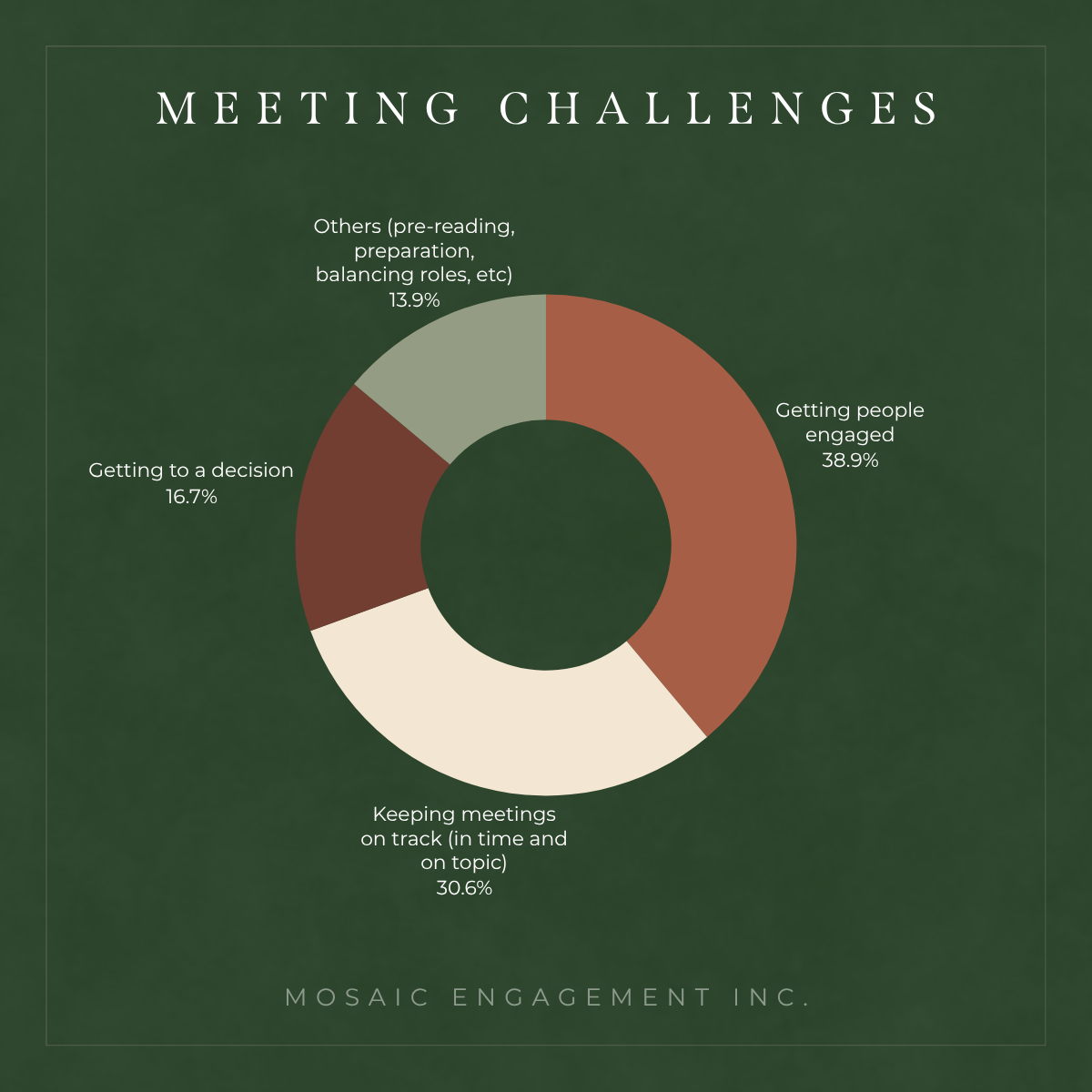
It's discouraging to spend hours planning, sending reminders, outlining the agenda, and preparing the room only to be met with silent glances, coffee break discussions, and loud, unyielding voices.
You tell yourself, “Tough crowd!” and you wish you could’ve done better.
But how could you do it better?
How would you get people not just talking, but genuinely participating (that means not being afraid to ask questions, challenge assumptions, and share what they have in mind)?
Here’s the process we use for our clients:
1. Identify who needs to be in the room
Before planning the agenda, list the interest groups with a stake in the decision.
Who will be impacted by the decision?
Who will implement the plan?
Who will deliver the service?
Who needs to sign off on the initiative?
Invite a couple of people from each group.
That way, every perspective is heard, the decision will have strong support, and everyone involved knows how they will help bring the plan to life.
2. Set the stage for a good conversation
People engage when they know what to expect. So before you start the discussion, be clear about these 4 things:
The purpose
“We’re here to set our priorities for the next six months”. Be specific, not just with the purpose but with the timeline, if necessary.
The outcome
“By the end of this meeting, we’ll have 3 priorities with owners and a date for follow-up.”
The agenda
What’s going to happen and when? When people know what’s coming next, they can show up more relaxed and prepared.
What’s expected of them
"Share your experience, listen to understand, put your phones away, we’ll have 5-minute breaks in between sessions"
Have these somewhere everyone can see, like a flip chart or a whiteboard. People will know what to expect, house rules stay top of mind, and you have something to point back to when discussions drift off or people start talking over each other.
3. Let discussions go from Pairs to Plenary
Before anyone shares with the whole group, have people discuss in pairs or small groups for a few minutes. This does two things at once:
The quiet ones get space to think out loud in a smaller group where it feels safer and less intimidating.
The loud ones can share their thoughts without taking over the whole conversation.
To make it work, plan your discussion rounds ahead of time.
For each round, decide what people will discuss, how long they’ll have, and how many people will be in each group.
Then map out how ideas get captured and carried into the next round. This makes sure every voice is considered, the ideas with better buy-in move forward, and the conversation doesn’t go in circles.
Here’s what that could look like for a priority-setting meeting:
| Pairs | Small Groups | Plenary | |
|---|---|---|---|
| What will they discuss? | “What’s one thing we should keep doing over the next six months, and what should we stop?” | “Looking at everyone’s ideas, which 3 matter most?” | “Which 3 priorities will we commit to, and who will own them?” |
| Allotted time | 5 min | 15 min | 20 min |
| Group size | 2 | 4-5 per group | Everyone |
| How are ideas captured? How will they move forward? | Each pair writes one “keep” and one “stop” on sticky notes | Each group picks its top 3 and posts them on a flip chart | Each group presents its 3, everyone votes, then owners and a follow-up date are set |
Pairs and small groups also give people a space to question an idea without feeling like they’re challenging someone in front of everyone.
And when you come back together for a plenary discussion, you can hear all the ideas and questions shared around the table.
Lindsay McLaughlin-Webb saw this firsthand in our work with the Manitoba College Athletics Conference. She shared…
"The guidance we received from Megan welcomed active participation and open communication that ensured all parties were considered and heard around the table. Megan provided invaluable tools that navigated the group to the desired end goal.”
Inviting the right people, setting clear expectations, and creating a safe space for discussion lay the groundwork for genuine engagement and meaningful input.
Put It Into Practice
To set the stage for your next important meeting, download the FREE Meeting Engagement Plan worksheet. It has the 3-step pre-meeting engagement plan and a post-meeting reflection, so you can review and what went well and what you can do better next time.
Have a question on how to implement this and improve engagement in your meetings? Reach out to us at hello@mosaicengagement.ca and we’d be answer them!